Whatever survives
Whatever survives
Whatever survives
Whatever survives
Mixed media poem by Dana Killmeyer Jain
Mixed media poem by Dana Killmeyer Jain
Mixed media poem by Dana Killmeyer Jain
Mixed media poem by Dana Killmeyer Jain
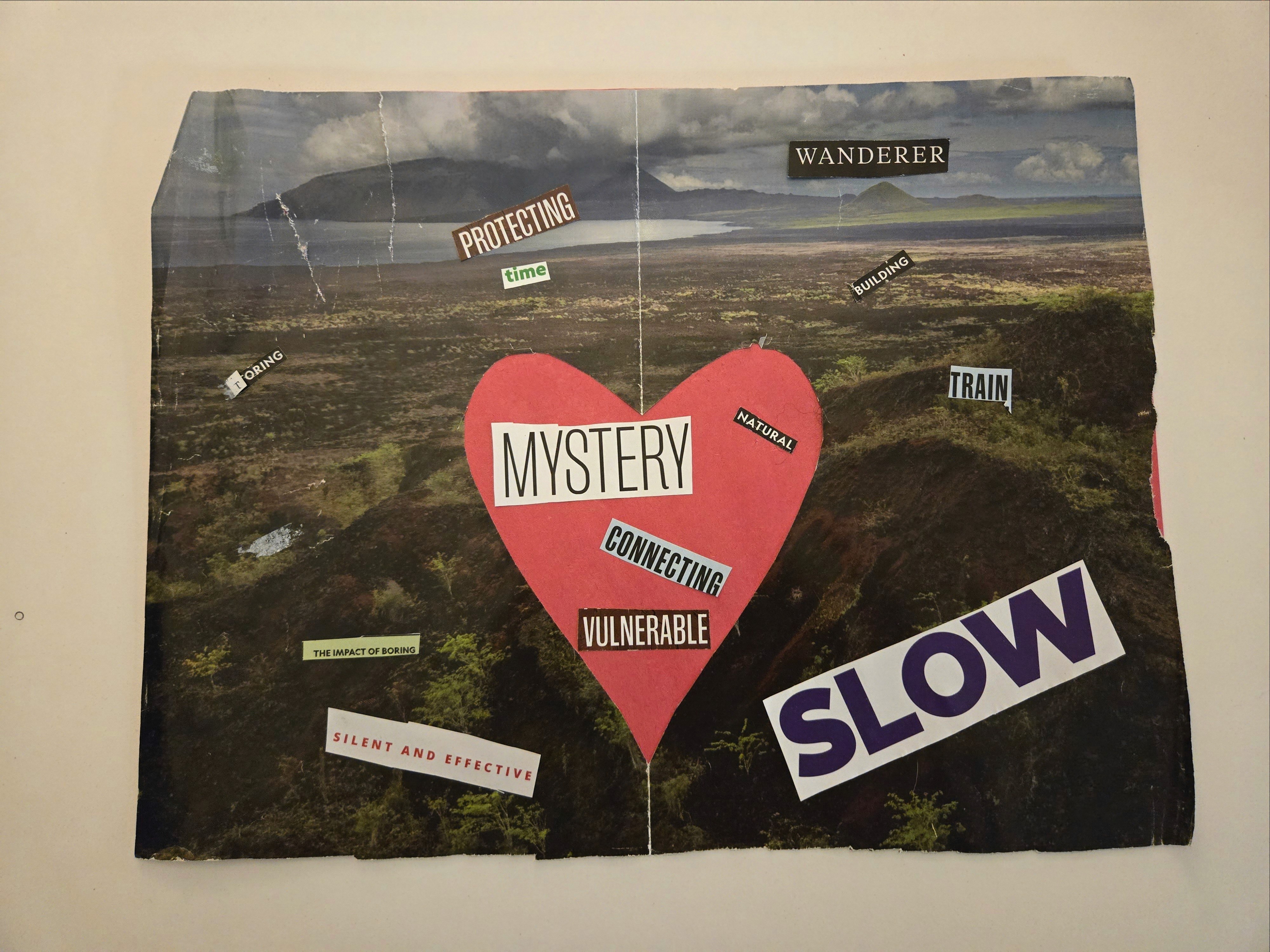
Whatever survives
the newcomers
the invasive cats and rats that pose
a risk to tortoises
many thousands of
peo-
ple spread
out
on the
island following the onset
of food
to live and work well will
demand hubris
humility crazy human
inven-
tion
We are the
consequences
The moon is
reality
on the surface of the moon
One pioneering Intuitive
distance impart
rogue behavior
respecting
boundary For the imaginable future
on
Earth where
one of the unspoken rules
is that presence matters
the
seven seas
Whatever survives
the newcomers
the invasive cats and rats that pose
a risk to tortoises
many thousands of
peo-
ple spread
out
on the
island following the onset
of food
to live and work well will
demand hubris
humility crazy human
inven-
tion
We are the
consequences
The moon is
reality
on the surface of the moon
One pioneering Intuitive
distance impart
rogue behavior
respecting
boundary For the imaginable future
on
Earth where
one of the unspoken rules
is that presence matters
the
seven seas
Whatever survives
the newcomers
the invasive cats and rats that pose
a risk to tortoises
many thousands of
peo-
ple spread
out
on the
island following the onset
of food
to live and work well will
demand hubris
humility crazy human
inven-
tion
We are the
consequences
The moon is
reality
on the surface of the moon
One pioneering Intuitive
distance impart
rogue behavior
respecting
boundary For the imaginable future
on
Earth where
one of the unspoken rules
is that presence matters
the
seven seas
Whatever survives
the newcomers
the invasive cats and rats that pose
a risk to tortoises
many thousands of
peo-
ple spread
out
on the
island following the onset
of food
to live and work well will
demand hubris
humility crazy human
inven-
tion
We are the
consequences
The moon is
reality
on the surface of the moon
One pioneering Intuitive
distance impart
rogue behavior
respecting
boundary For the imaginable future
on
Earth where
one of the unspoken rules
is that presence matters
the
seven seas
Presencing (Whatever survives) October 2025
is about
adventure, opportunity
presence Whoever
powerfully influ-
ences its rules shape its future
Now is the time
for
slow moving
control for
everyone is
flying
and establishing rules for
danger
from the surface
Wonder is driving
opportunism
a stretch the life
mission
hope
will see
soon
Understanding
universe has tremen-
dous urgency
opportunity presents
wonder
origins have the
ability to complete
the picture
We are stardust
This is the only way
Presencing (Whatever survives) October 2025
is about
adventure, opportunity
presence Whoever
powerfully influ-
ences its rules shape its future
Now is the time
for
slow moving
control for
everyone is
flying
and establishing rules for
danger
from the surface
Wonder is driving
opportunism
a stretch the life
mission
hope
will see
soon
Understanding
universe has tremen-
dous urgency
opportunity presents
wonder
origins have the
ability to complete
the picture
We are stardust
This is the only way
Presencing (Whatever survives) October 2025
is about
adventure, opportunity
presence Whoever
powerfully influ-
ences its rules shape its future
Now is the time
for
slow moving
control for
everyone is
flying
and establishing rules for
danger
from the surface
Wonder is driving
opportunism
a stretch the life
mission
hope
will see
soon
Understanding
universe has tremen-
dous urgency
opportunity presents
wonder
origins have the
ability to complete
the picture
We are stardust
This is the only way
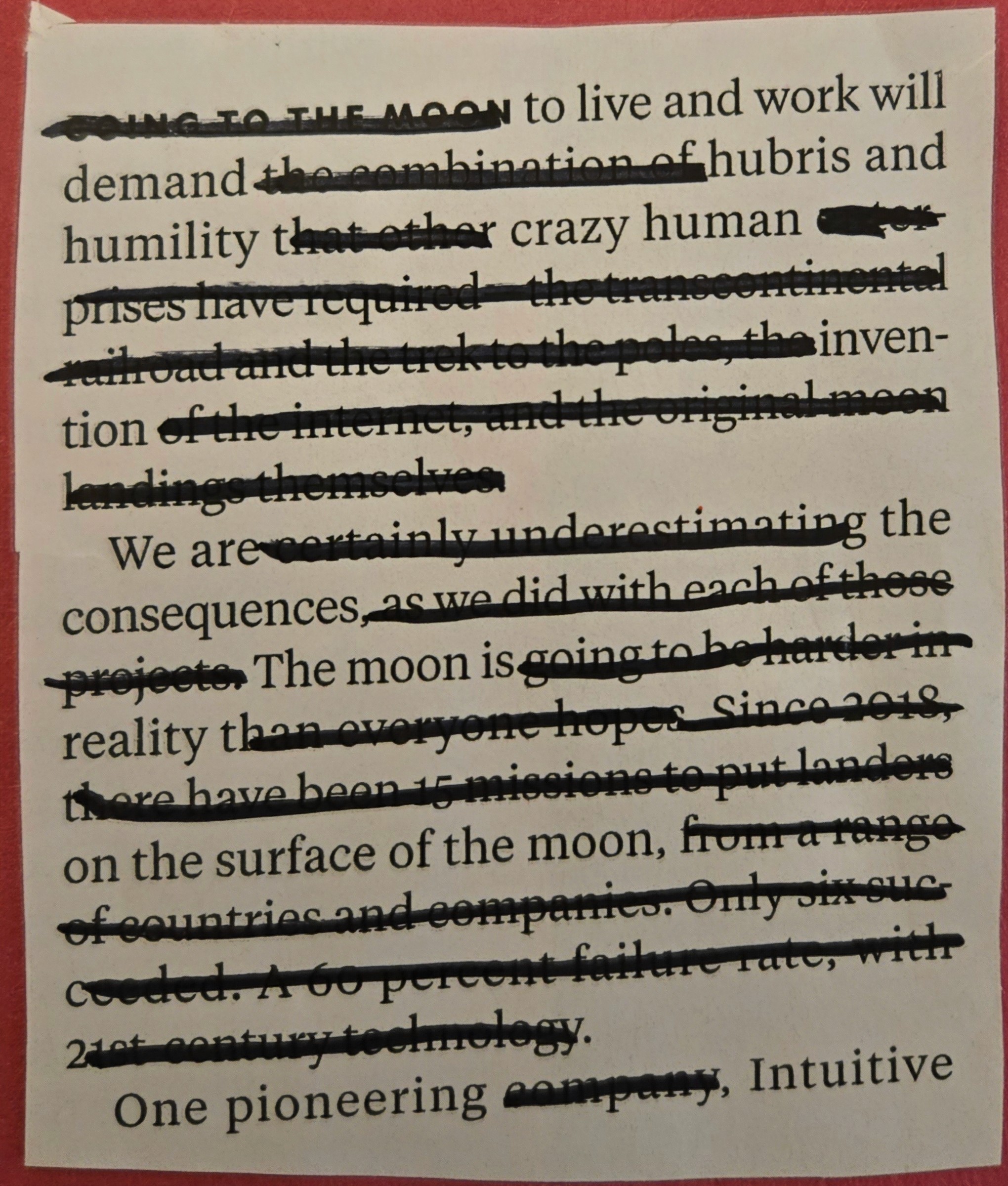
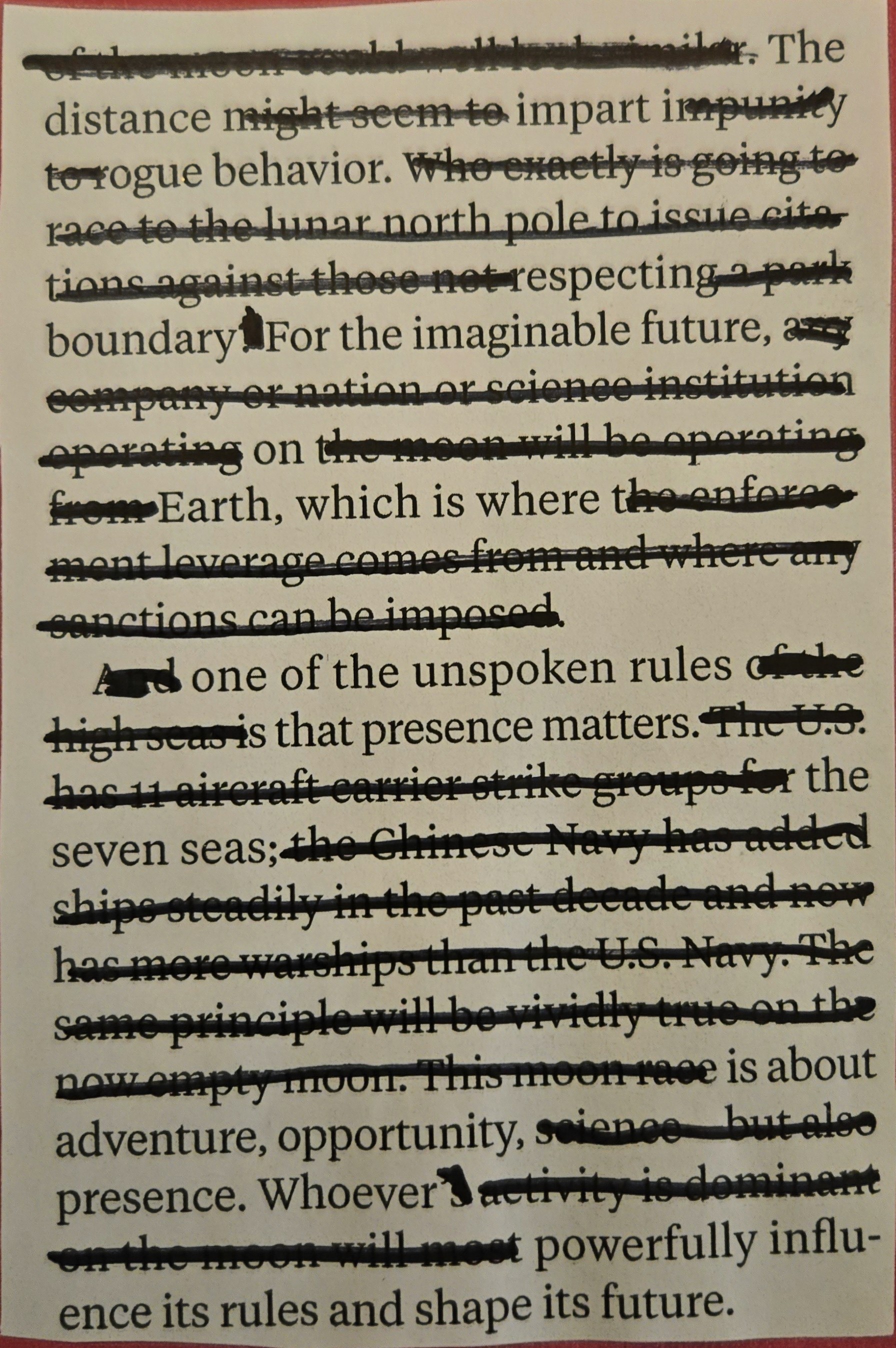
“Presencing (Whatever Survives)” is an erasure of two National Geographic articles (September 2025): one about ancient Galápagos tortoises and another about humanity’s ambitions to live and work on the moon. The juxtaposition of invokes questions of colonialism and futurity with the agency of the tortoise, its mere enduring presence, standing as a quiet counterpoint to human enterprise. The poem asks how our visions of the future might break from the
colonial past. It brings this question into focus by literally placing an Earth-bound story (the tortoise, an emblem of longevity and ecological wisdom) beside a space-bound story (the moon, an emblem of human technological aspirations).The poem’s very form suggests that our future might be better perceived through careful attention to what has been erased and what has survived, rather than from narratives of conquest and control. The preserved words and fragments remain in their original location, clustered in dense phrases or isolated as a single word surrounded by white space, to create a visual rhythm that conveys both connection and fragmentation.As such, the work resists a single authoritative narrative. Meaning is collaboratively produced by the original texts, the artist, and the reader who interprets the fragments. The authority of National Geographic’s articles, one shaping our view of conservation, the other shaping our exploration of space, is gently subverted through a democratized re-reading. By erasing and combining these texts about the past (ancient tortoises) and the
future (life on the moon), the artist brings forth a new text situated in a perennial now, grappling with what survives of our stories when we strip away the dominant narrative. The poem asks us to imagine futures not through exploitation and extraction but through wonder and relationship, and it demonstrates what that might feel like by making us attend closely to each remaining word, space, and
silence. By literally slowing down the reading process, “Presencing (Whatever Survives)” cultivates a sense of presence and attentiveness. It asks us to value being as much as doing, and to see the non-human not as backdrop for human drama but as central characters in their own right.
Presencing (Whatever survives) October 2025
is about
adventure, opportunity
presence Whoever
powerfully influ-
ences its rules shape its future
Now is the time
for
slow moving
control for
everyone is
flying
and establishing rules for
danger
from the surface
Wonder is driving
opportunism
a stretch the life
mission
hope
will see
soon
Understanding
universe has tremen-
dous urgency
opportunity presents
wonder
origins have the
ability to complete
the picture
We are stardust
This is the only way
“Presencing (Whatever Survives)” is an erasure of two National Geographic articles
(September 2025): one about ancient Galápagos tortoises and another about
humanity’s ambitions to live and work on the moon. The juxtaposition of these
narratives invokes questions of colonialism and futurity with the agency of the
tortoise, its mere enduring presence, standing as a quiet counterpoint to human
enterprise. The poem asks how our visions of the future might break from the
colonial past. It brings this question into focus by literally placing an Earth-bound
story (the tortoise, an emblem of longevity and ecological wisdom) beside a space-
bound story (the moon, an emblem of human technological aspirations).
The poem’s very form suggests that our future might be better perceived through
careful attention to what has been erased and what has survived, rather than from
narratives of conquest and control. The preserved words and fragments remain in
their original location, clustered in dense phrases or isolated as a single word
surrounded by white space, to create a visual rhythm that conveys both connection
and fragmentation.
As such, the work resists a single authoritative narrative.
Meaning is collaboratively produced by the original texts, the artist, and the reader
who interprets the fragments. The authority of National Geographic’s articles, one
shaping our view of conservation, the other shaping our exploration of space, is
gently subverted through a democratized re-reading.
By erasing and combining these texts about the past (ancient tortoises) and the
future (life on the moon), the artist brings forth a new text situated in a perennial
now, grappling with what survives of our stories when we strip away the dominant
narrative. The poem asks us to imagine futures not through exploitation and
extraction but through wonder and relationship, and it demonstrates what that
might feel like by making us attend closely to each remaining word, space, and
silence. By literally slowing down the reading process, “Presencing (Whatever
Survives)” cultivates a sense of presence and attentiveness. It asks us to value
being as much as doing, and to see the non-human not as backdrop for human
drama but as central characters in their own right.
“Presencing (Whatever Survives)” is an erasure of two National Geographic articles
(September 2025): one about ancient Galápagos tortoises and another about
humanity’s ambitions to live and work on the moon. The juxtaposition of these
narratives invokes questions of colonialism and futurity with the agency of the
tortoise, its mere enduring presence, standing as a quiet counterpoint to human
enterprise. The poem asks how our visions of the future might break from the
colonial past. It brings this question into focus by literally placing an Earth-bound
story (the tortoise, an emblem of longevity and ecological wisdom) beside a space-
bound story (the moon, an emblem of human technological aspirations).
The poem’s very form suggests that our future might be better perceived through
careful attention to what has been erased and what has survived, rather than from
narratives of conquest and control. The preserved words and fragments remain in
their original location, clustered in dense phrases or isolated as a single word
surrounded by white space, to create a visual rhythm that conveys both connection
and fragmentation.
As such, the work resists a single authoritative narrative.
Meaning is collaboratively produced by the original texts, the artist, and the reader
who interprets the fragments. The authority of National Geographic’s articles, one
shaping our view of conservation, the other shaping our exploration of space, is
gently subverted through a democratized re-reading.
By erasing and combining these texts about the past (ancient tortoises) and the
future (life on the moon), the artist brings forth a new text situated in a perennial
now, grappling with what survives of our stories when we strip away the dominant
narrative. The poem asks us to imagine futures not through exploitation and
extraction but through wonder and relationship, and it demonstrates what that
might feel like by making us attend closely to each remaining word, space, and
silence. By literally slowing down the reading process, “Presencing (Whatever
Survives)” cultivates a sense of presence and attentiveness. It asks us to value
being as much as doing, and to see the non-human not as backdrop for human
drama but as central characters in their own right.
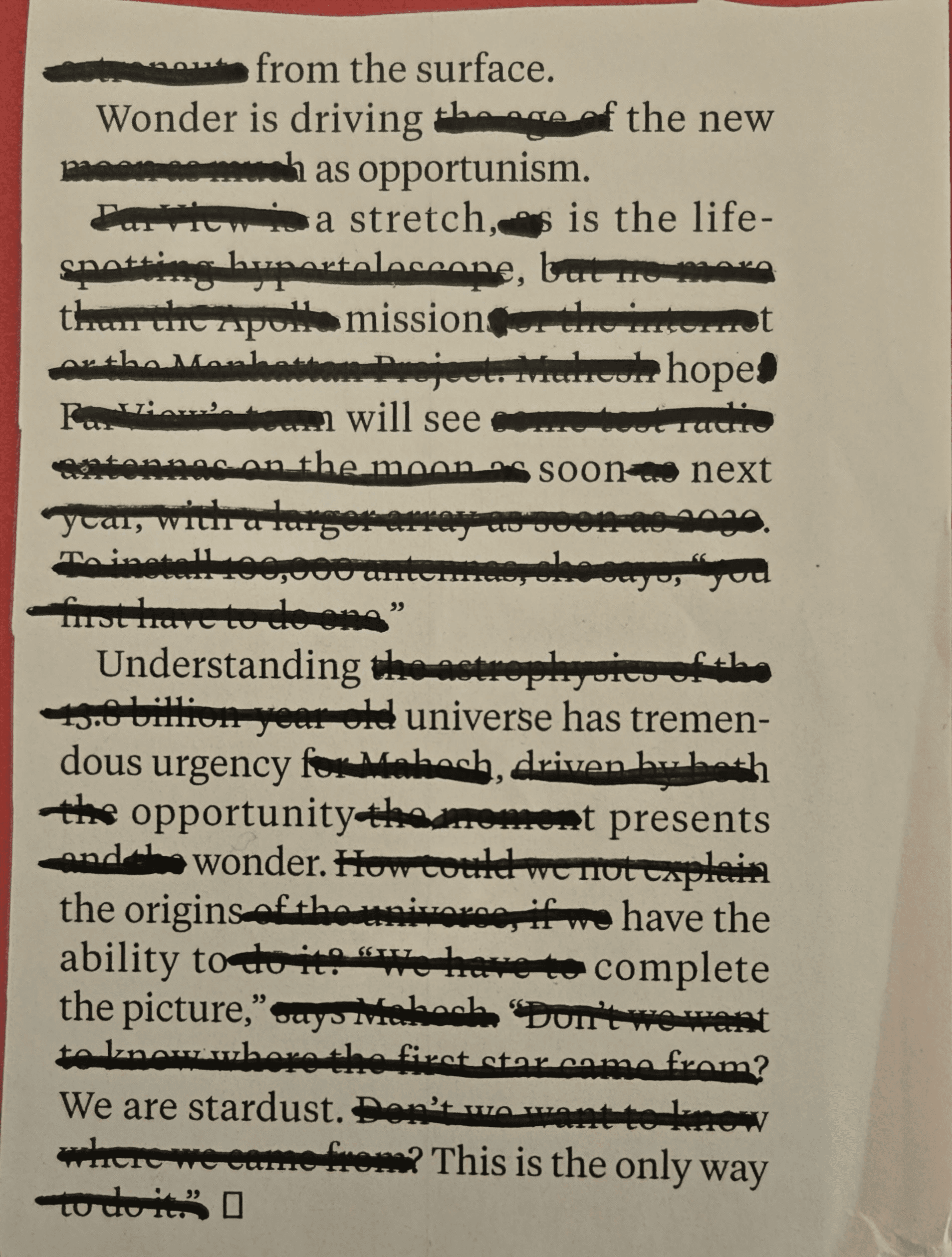
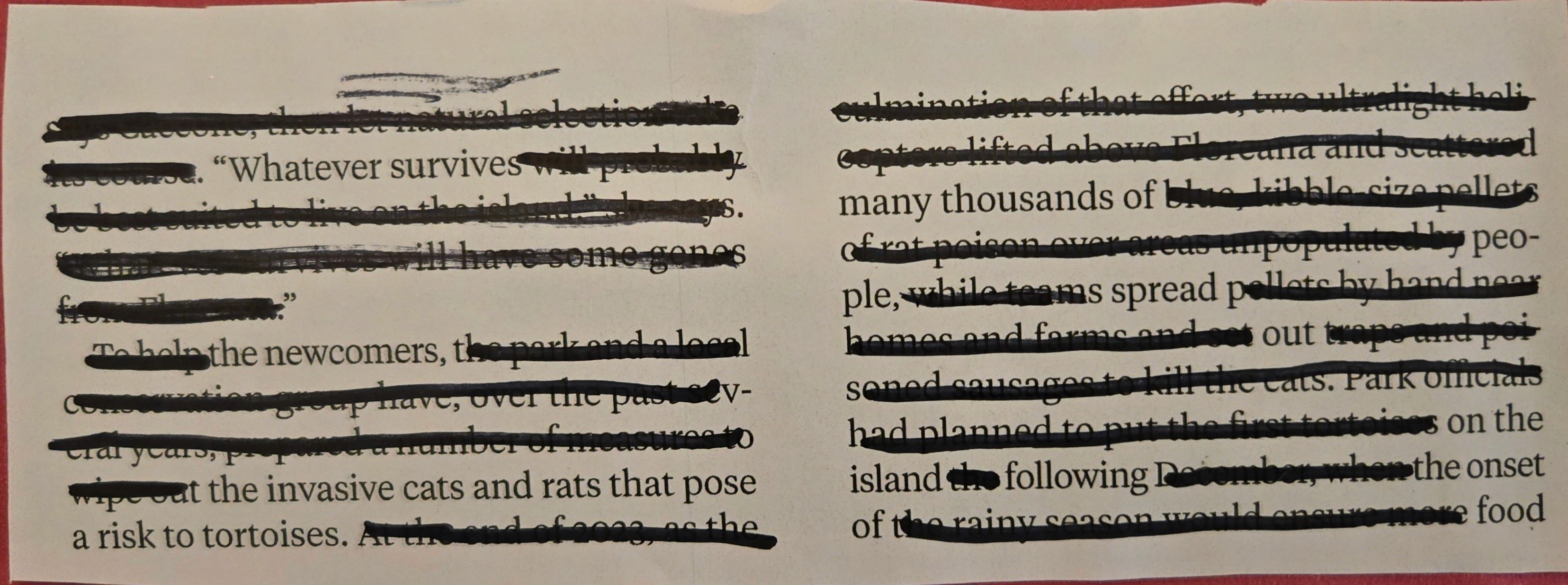
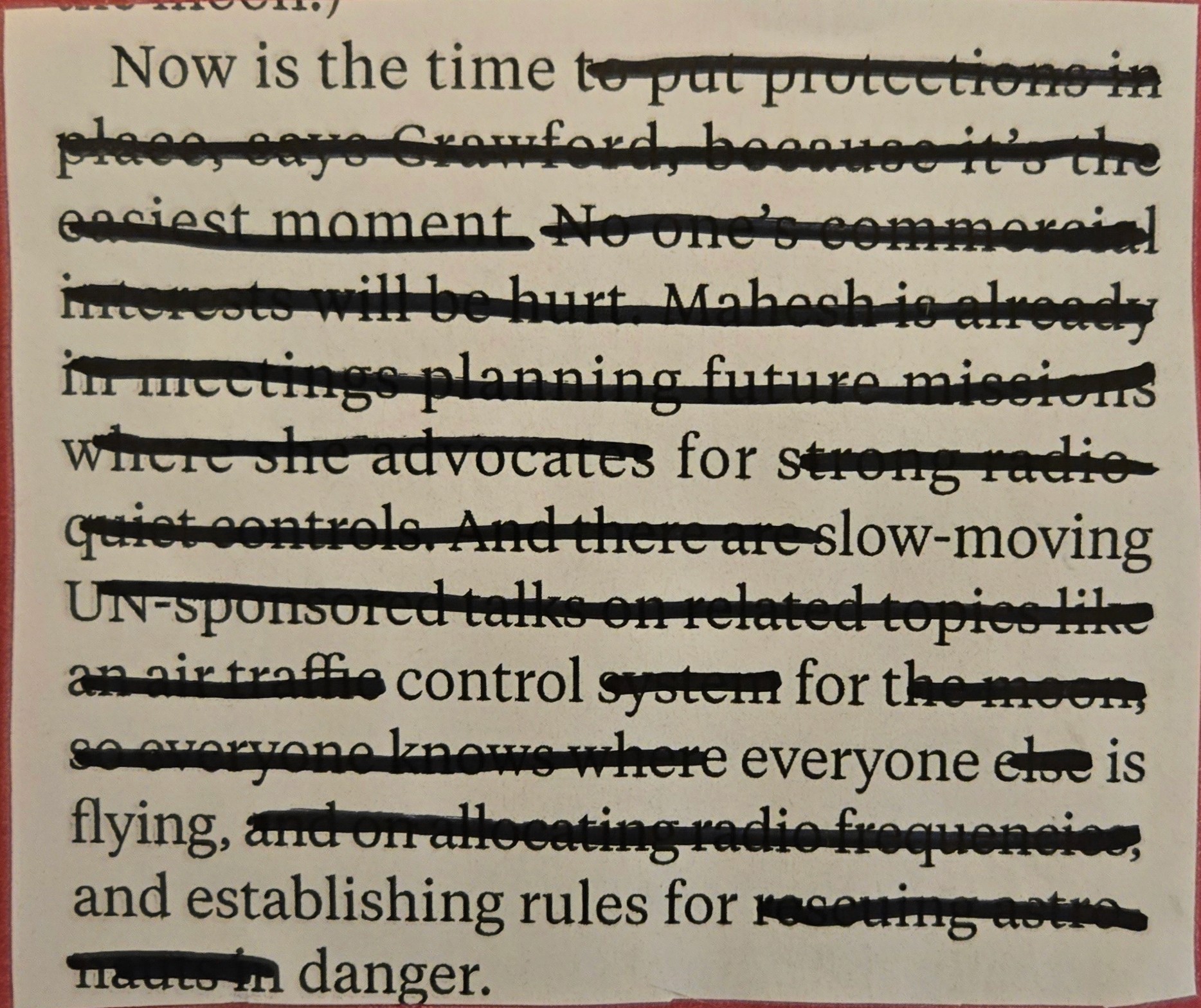
“Presencing (Whatever Survives)” is an erasure of two National Geographic articles (September 2025): one about ancient Galápagos tortoises and another about humanity’s ambitions to live and work on the moon. The juxtaposition of invokes questions of colonialism and futurity with the agency of the tortoise, its mere enduring presence, standing as a quiet counterpoint to human enterprise. The poem asks how our visions of the future might break from the colonial past. It brings this question into focus by literally placing an Earth-bound story (the tortoise, an emblem of longevity and ecological wisdom) beside a space-bound story (the moon, an emblem of human technological aspirations).
The poem’s very form suggests that our future might be better perceived through careful attention to what has been erased and what has survived, rather than from narratives of conquest and control. The preserved words and fragments remain in their original location, clustered in dense phrases or isolated as a single word surrounded by white space, to create a visual rhythm that conveys both connection and fragmentation.
As such, the work resists a single authoritative narrative. Meaning is collaboratively produced by the original texts, the artist, and the reader who interprets the fragments. The authority of National Geographic’s articles, one shaping our view of conservation, the other shaping our exploration of space, is gently subverted through a democratized re-reading.
By erasing and combining these texts about the past (ancient tortoises) and the future (life on the moon), the artist brings forth a new text situated in a perennial now, grappling with what survives of our stories when we strip away the dominant narrative. The poem asks us to imagine futures not through exploitation and extraction but through wonder and relationship, and it demonstrates what that might feel like by making us attend closely to each remaining word, space, and silence. By literally slowing down the reading process, “Presencing (Whatever Survives)” cultivates a sense of presence and attentiveness. It asks us to value being as much as doing, and to see the non-human not as backdrop for human drama but as central characters in their own right.